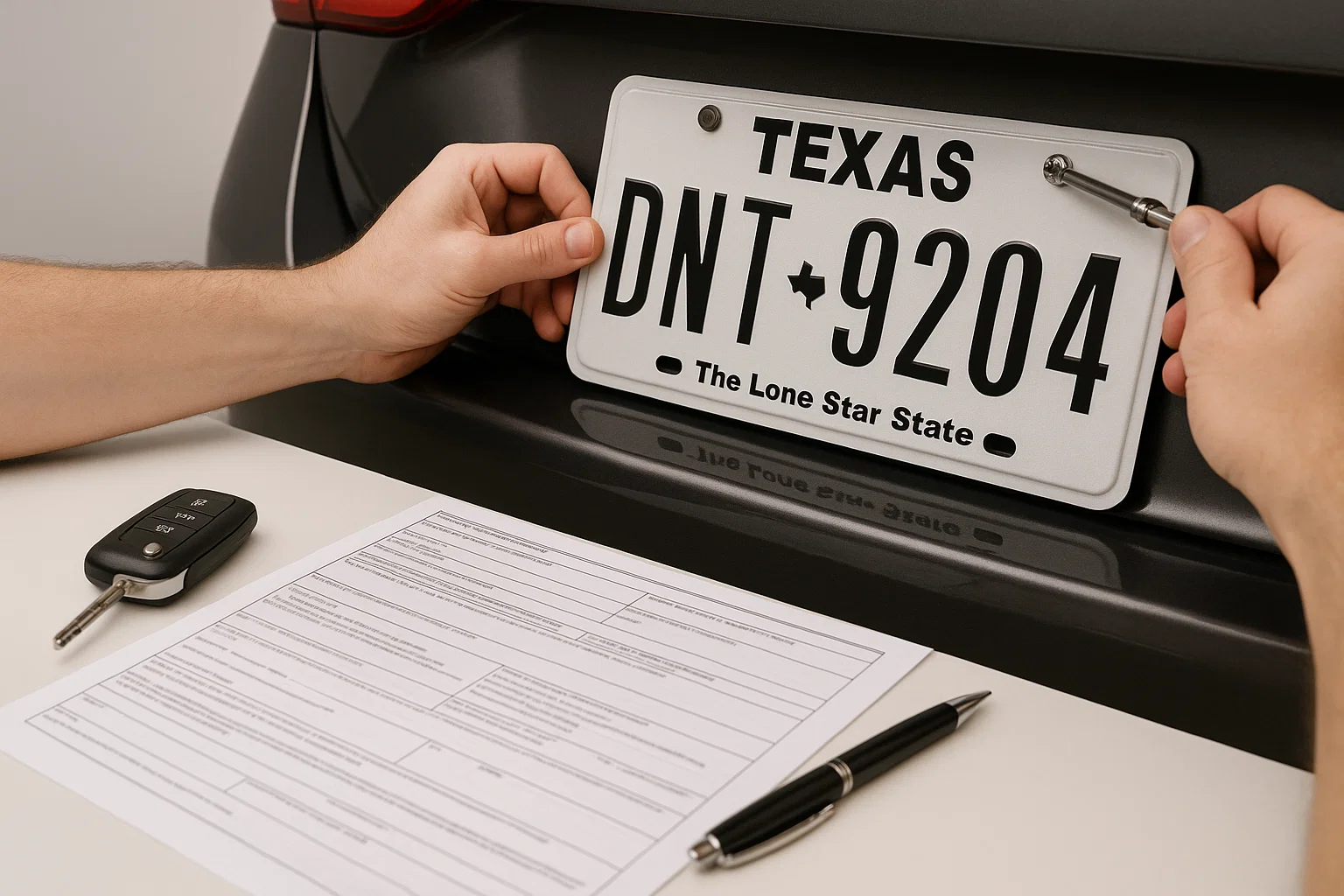
Relocating to Texas means your vehicle paperwork will change. If you’ve recently moved, it’s important to know what the law requires for auto insurance and registration. Here’s a straightforward guide for new Texas residents.
When Does Texas Consider You a Resident?
Texas considers you a resident if you are living here indefinitely—even if you plan to move back later. Common signs of residency:
- Taking a job in Texas
- Renting or buying a home
- Enrolling children in Texas schools
- Spending most nights in Texas
By law, new residents must register vehicles and obtain Texas insurance within 30 days of establishing residency.
Texas Vehicle Registration: How to Register Your Vehicle”
Steps:
- Get a vehicle inspection at a certified Texas Department of Public Safety station.
- Obtain Texas auto insurance that meets state minimum requirements.
- Register your vehicle at your local county tax office. Bring:
- Out-of-state title/registration
- Proof of Texas insurance
- Vehicle inspection report
- Valid ID
- Proof of address
No title?
A bonded title may be needed. See our Bonded Title Guide for more information.
Switching Your Auto Insurance to Texas
You can’t keep your previous state’s insurance if you’re now a Texas resident. The policy needs to be written for your Texas address, meeting Texas law.
- Cancel your out-of-state policy only after your Texas policy is active, to avoid any coverage gap.
- Texas insurance cards and documents will show your Texas address and vehicle details.
Minimum Liability Limits (2025):
- Bodily Injury: $30,000 per person / $60,000 per accident
- Property Damage: $25,000 per accident
Other coverage options—like uninsured/underinsured motorist, rental, and roadside assistance—are available. See our UM/UIM coverage article and Guide to Add-Ons for more details.
Optional Coverages to Consider
Some drivers look at options such as:
- Comprehensive & Collision: For damage to your own vehicle.
- Rental Reimbursement & Roadside Assistance: For added convenience.
- Personal Injury Protection (PIP): Additional medical coverage.
More information on these can be found in our Add-Ons Guide.
Why You Need to Update Everything
- Claims can be denied if your vehicle is insured or registered in another state while you’re a Texas resident.
- Fines or tickets for improper registration and insurance are possible.
- The insurance company may cancel your policy if your information is not accurate.
If You Move Back
If your time in Texas is truly short-term and you are not establishing residency, check with your insurance company for guidance. Most people staying “indefinitely” will be considered Texas residents for insurance and registration.
Quick Checklist for New Texas Residents
- Schedule vehicle inspection
- Buy Texas-compliant auto insurance
- Register your vehicle at the county tax office
- Update your address everywhere (license, insurance, etc.)
- Review optional coverage needs
Need help?
Calyco Surety Bonds & More helps newcomers get set up with insurance, bonds, and guidance for all your Texas paperwork. Contact us for assistance or a fast quote.
References:
- Texas Department of Motor Vehicles – New Residents Guide
- Texas Department of Insurance – Auto Insurance Basics
FAQs: Moving to Texas – Auto Insurance & Registration
1. How soon do I need to register my vehicle after moving to Texas?
You must register your vehicle within 30 days of establishing residency in Texas. Delays can result in fines or trouble with law enforcement.
Source: Texas Department of Motor Vehicles – New to Texas?
2. Can I keep my old out-of-state auto insurance while living in Texas?
No. If you’re considered a Texas resident, your vehicle must be insured under a Texas policy with your Texas address. Out-of-state policies do not meet Texas legal requirements for residents.
Source: Texas Department of Insurance – Auto Insurance Guide
3. What documents do I need to register my vehicle in Texas?
You’ll need your out-of-state title or registration, proof of Texas auto insurance, a vehicle inspection report, valid ID, and proof of your Texas address.
Source: Texas Department of Motor Vehicles – How to Register Your Vehicle
4. What happens if I don’t update my registration or insurance after moving?
You risk denied claims, policy cancellation, tickets, and potential legal issues. Insurance companies and law enforcement both require up-to-date, accurate information.
Source: Texas Department of Insurance – Consequences of Inaccurate Info, Texas Department of Motor Vehicles – Fines and Penalties
5. Do I need a Texas driver’s license before I can register my vehicle?
It’s recommended, but some counties may let you register a vehicle with another form of ID if you’re in the process of getting a Texas license. By law, you must obtain a Texas driver’s license within 90 days of moving if you intend to drive here.
Source: Texas Department of Public Safety – New Texas Residents, Texas Department of Motor Vehicles – Register Your Vehicle
If you have more questions, contact us for direct answers or personal guidance.